
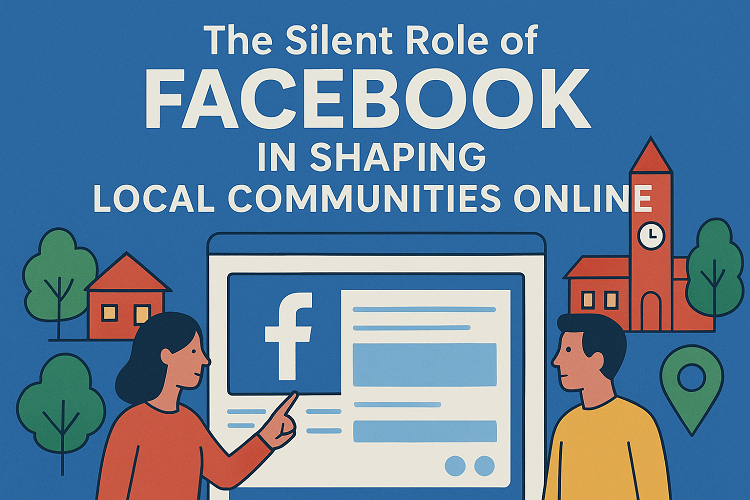
Facebook is commonly viewed first and foremost as a platform for connecting with friends and family. But for more than a decade, with posts and photos exchanged, the platform has emerged to play a critical role in organizing local communities. Facebook’s impact is often invisible, yet the ways in which it influences neighborhood relationships, supports local businesses, and connects individuals to civic engagement is powerful.
From Facebook groups arose Digital Town Squares
Local Facebook groups have transformed Facebook into a digital town square. Groups like neighborhood apartment complexes, street groups, and city-wide groups, allow residents to post updates, requests for recommendations, and alerts about lost pets or safety issues.
The real-time flow of information fundamentally alters the way neighbors connect to one another in meaningful ways, even when they do not often interact. For residents, especially urban residents, finding community can be difficult and even with a defined sense of place, the disconnect created through today’s urban settings can disrupt relationships. Facebook facilitates belonging.
Boosting Local Voices
Facebook provides a platform for people and small organizations to elevate their voice without the necessity of big budgets or formal channels. Local initiatives like blood drives, clean-up campaigns, or volunteer opportunities spread quickly when shared with your networks. Facebook allows for conversations in real-time, and keeps the fire and impart the potential for activism to spark grassroots efforts. It provides local residents with the ability to coordinate action on any issue that affects them from neglected potholes to failed school repairs.
Supporting Small Businesses & Events
Local entrepreneurs and event organizers can tap into Facebook’s wide reach to connect with their community. Many small shops, home-based enterprises, and artisans utilize community groups and marketplace functions by simply listing products or promotions. In the same way, local events, let it be fairs, workshops or culturally diverse programming, gain visibility from posts and event pages, don’t just interest observers. Facebook can act as an informal promotional hub that fuels growth in local economies.
Promoting Civic Engagement
In addition to commerce and message-sharing, Facebook has an important, but subtle role in civic engagement. People will share information on their neighborhood’s municipal service, local election, or policy changes that motivate debate.
As citizens have constructive debates in a group, they enhance transparency and accountability by giving them space to signal concern and demand action. While conversations on social media are virtual, the discussions can be converted to real-world solutions “to take action,” “start a petition,” “called for a meeting,” or “work collaboratively to solve the problem.”
Challenges and Opportunities
While misinformation and litigation sometimes complicate dialogue, we have seen that the connectedness is far more positive than negative when groups establish rules and moderate in a responsible manner. Properly managed, Facebook can continue to enhance neighborhood connections, raise awareness of local issues, and develop educated and resilient communities.
In summary, there are various ways to quantify the value of Facebook to people, and much of it is implied rather than explicit. Each status update carries the potential to connect, collaborate, and promote positive change in our own backyards.