
Picture this: it’s 2 AM, and someone is staring at a Digital Audio Workstation interface that looks more like a spaceship control panel than a creative tool. Three hours have been spent trying to program a simple drum pattern, and it still sounds like a robot having a seizure. The melody in their head is beautiful—haunting, even—but the technical chasm between imagination and execution feels unbridgeable.
That frustration is universal among creative people without formal music training. We hear soundtracks in our minds while commuting, envision perfect background scores for projects, and feel rhythms that could elevate content—but we lack the years of training required to manifest those ideas. For the longest time, this seemed like an immutable reality. Musicians made music; the rest of us just consumed it.
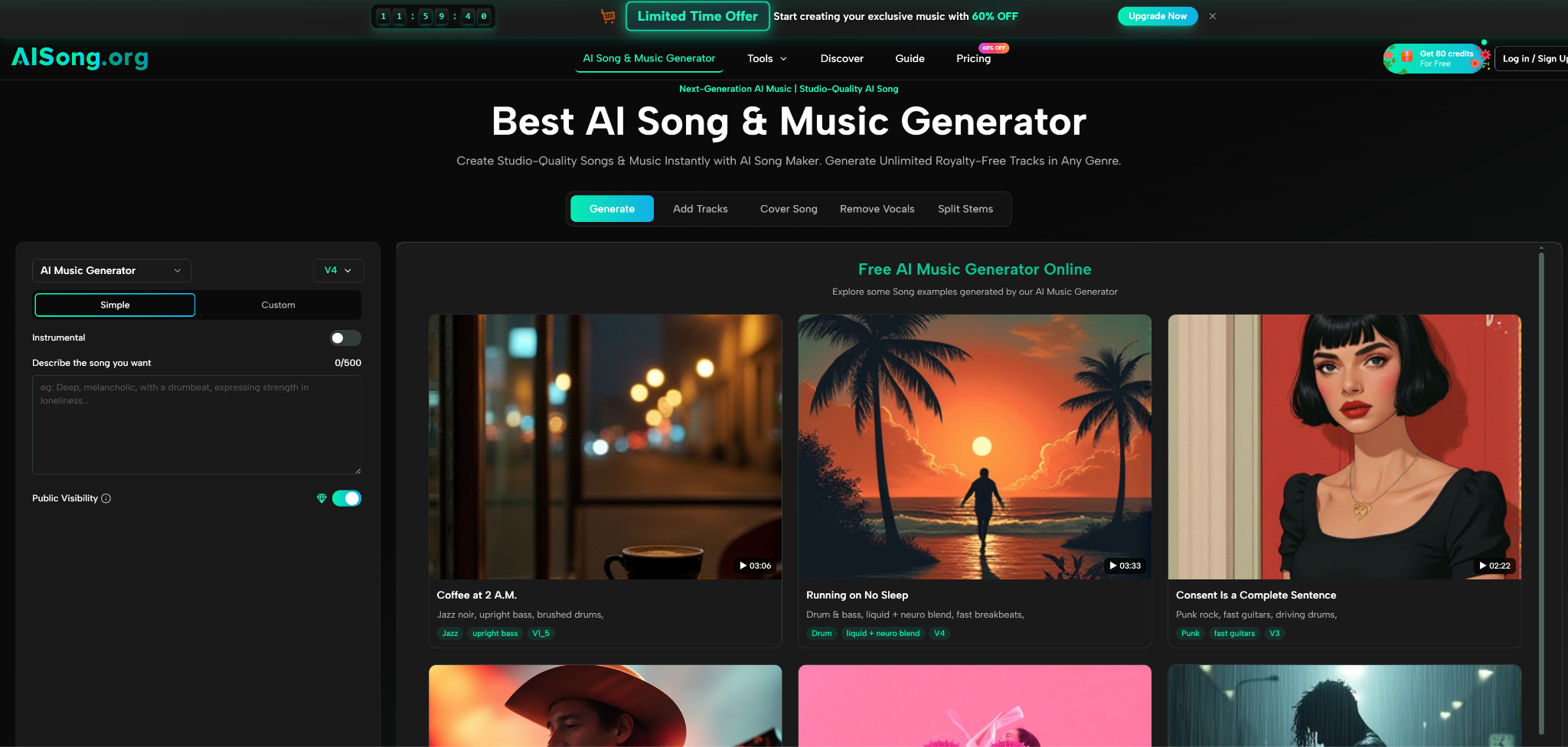
Then AI music generation emerged, specifically tools like the AI Song Generator, and everything changed. Not overnight, and not without skepticism, but gradually and profoundly. This isn’t a story about technology replacing human creativity—it’s about amplifying it, democratizing it, and occasionally surprising even its users with what becomes possible.
The Technical Barrier That Silences Ideas
Traditional music production has an accessibility problem. The barrier to entry is so high that countless musical ideas die in the minds of people who could never justify the investment required to learn production.
Consider what’s traditionally required: software mastery of professional DAWs like Ableton Live or Logic Pro that demand months just to navigate competently, music theory foundation understanding keys and chord progressions, instrument proficiency for inputting melodies, technical knowledge of audio engineering concepts, and equipment investment easily exceeding two thousand dollars.
Professional musicians deserve every bit of respect they receive for mastering these skills. But this gatekeeping, however unintentional, means that a teacher who wants custom music for classroom activities, a podcaster needing a unique intro theme, or a small business owner creating brand content must either pay premium rates or settle for generic stock music.
How AI Music Generation Actually Works
Pattern Recognition Across Massive Datasets
These systems are trained on enormous libraries of existing music—potentially millions of songs across every conceivable genre. During training, the AI learns to recognize patterns: which chord progressions appear in sad songs, what rhythmic structures define different genres, how instrumentation choices affect emotional perception.
When someone inputs “peaceful acoustic guitar,” the AI isn’t randomly generating notes. It’s identifying every “peaceful” song in its training data, analyzing what musical characteristics they share, and applying those patterns to create something new.
Natural Language Processing for Musical Intent
The most impressive aspect, based on extensive testing, is how these systems interpret descriptive language. When someone writes “builds to an emotional climax,” the AI understands that means starting with simpler arrangements, gradually adding instrumental layers, increasing dynamic range, and creating tension through harmonic choices before resolution.
This works remarkably well with emotional descriptors like “melancholic,” “triumphant,” or “mysterious,” and contextual phrases such as “perfect for a wedding” or “epic battle scene.”
Real-World Applications Worth Exploring
Background Music for Video Content
Educational YouTube videos about historical events require background music, and this has always been a challenge. Stock music libraries offer thousands of tracks, but finding something that matches specific content’s pacing and emotional arc is like searching for a needle in a haystack.
For a video about the Apollo 11 mission, the music needed to feel inspirational but not overly dramatic, slightly vintage evoking the 1960s, building tension during the landing sequence, and triumphant at the conclusion. Testing revealed that about fifteen variations were needed before landing on one that felt perfect. The entire process took maybe forty minutes—compared to the hours previously spent browsing stock libraries.
Transforming Written Lyrics Into Songs
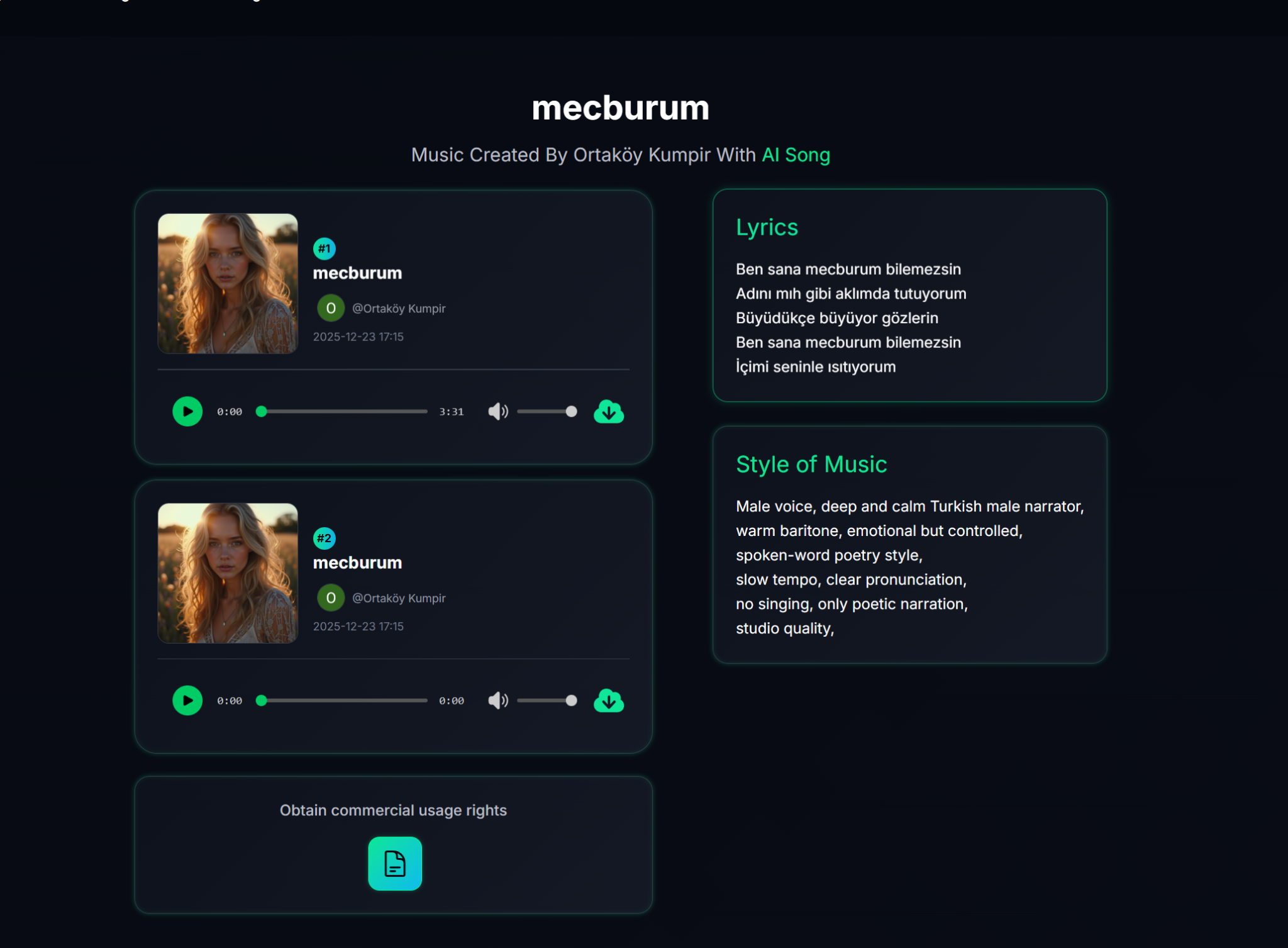
Many people write poetry, and occasionally those poems feel like song lyrics waiting for music. When lyrics about childhood memories—nostalgic, bittersweet, with imagery of summer evenings and fading light—are input, the AI Song Maker analyzes not just the words but their rhythm and emotional content.
The generated music typically features a tempo that matches the natural cadence of lyrics, minor key progressions during melancholic verses, and instrumentation that complements rather than overwhelms the words. Based on testing, this feature works best with lyrics that have clear verse-chorus structure.
Comparing AI Music Platforms
After testing multiple platforms over several months, significant differences emerge in capability, interface design, and output quality.
| Comparison Factor | AI Song Generator | Generic Platform B | Generic Platform C |
| Interface Complexity | Conversational—describe in plain English | Moderate—some music terminology required | High—feels like a simplified DAW |
| Generation Speed | 30-90 seconds consistently | 60-180 seconds | 2-5 minutes |
| Prompt Interpretation | Excellent with emotional/contextual descriptions | Good with genre terms, struggles with mood | Best with technical specifications |
| Instrumental Quality | Professional-grade across most genres | Electronic music excellent, acoustic weaker | Consistently high but limited style range |
| Commercial Licensing | Royalty-free clearly stated | Requires premium tier for commercial use | Complex tiered licensing |
The most valuable platforms are those that accept natural language descriptions and handle the technical translation internally. When someone can type “create something that sounds like a Pixar movie opening scene” and receive a usable result, that’s genuinely transformative accessibility.
The Limitations Worth Acknowledging
The Safe Choice Problem
AI-generated music tends toward harmonic and structural safety. It produces compositions that are technically correct and pleasant but sometimes lack the unexpected choices that make music memorable. When comparing AI-generated tracks to human compositions in similar genres, the human work often includes surprising key changes or unconventional rhythmic choices that create emotional impact.
Vocal Generation Remains Problematic
This is the most noticeable weakness across every platform tested. Instrumental tracks can sound remarkably polished and professional. But AI-generated vocals still carry a synthetic quality that’s immediately recognizable—unnatural breathing patterns, overly perfect pitch, and emotional flatness in delivery. For any project where vocals are the focal point, human singers remain necessary.
The Iteration Reality
Here’s something promotional materials rarely mention: multiple generations are often needed to achieve what’s being imagined. The success rate—defining success as “first generation matches vision”—appears to be around thirty percent based on extensive testing. That’s not necessarily a problem, since generation is fast and usually unlimited, but it’s worth knowing this isn’t a “describe once, receive perfection” process.
Practical Applications Beyond the Obvious
Content creators—podcasters, YouTubers, and social media producers—face a unique challenge: they need consistent musical branding but often lack budgets for custom composition. Many use AI generation to develop signature intro music, transition sounds, and outro themes that give their content professional polish.
The key advantage here is customization. Instead of using the same stock music track that dozens of other creators use, something unique can be generated that becomes associated specifically with their brand.
Small businesses are also discovering applications. A yoga studio might generate calming instrumental tracks that match their specific brand energy, while a coffee shop could create a playlist of mellow acoustic tracks that feel cohesive rather than jarring.
The Broader Implications
There’s significant tension in music communities about AI generation. Some view it as democratizing creativity, others as devaluing artistic skill. Both perspectives hold partial truth.
These tools undeniably lower barriers. The single parent working two jobs who could never afford music lessons can now explore composition. The small nonprofit creating educational content can produce custom soundtracks without budget-breaking licensing fees. This expansion of who gets to participate in music creation feels fundamentally positive.
However, professional musicians rightfully worry about market saturation and devaluation. If anyone can generate decent background music in seconds, what happens to entry-level composition work?
The most productive perspective recognizes that AI music generation serves different needs than professional composition. It’s not replacing the scored soundtrack for a major film or the carefully crafted album from an established artist. It’s filling gaps where custom music was previously unaffordable or inaccessible—similar to how smartphone cameras democratized casual photography while professional photographers adapted by emphasizing irreplaceable skills.
Moving Forward
AI music generation represents a fundamental shift in accessibility, but it doesn’t eliminate the need for musical taste, creative vision, or understanding of how music affects human emotion. The technology handles technical execution; humans still provide intent, curation, and context.
For anyone who’s felt the frustration of musical ideas trapped in imagination, these tools offer genuine liberation. The melody that once died in someone’s mind because they couldn’t play piano can now exist in the world. The podcast that sounded amateurish with generic stock music can now have a custom sonic identity.
That expansion of creative possibility—more people able to share more ideas—feels like progress worth embracing, even as we navigate the complications it introduces. The future of music creation will be collaborative, with technology amplifying human intent in ways we’re only beginning to explore.