
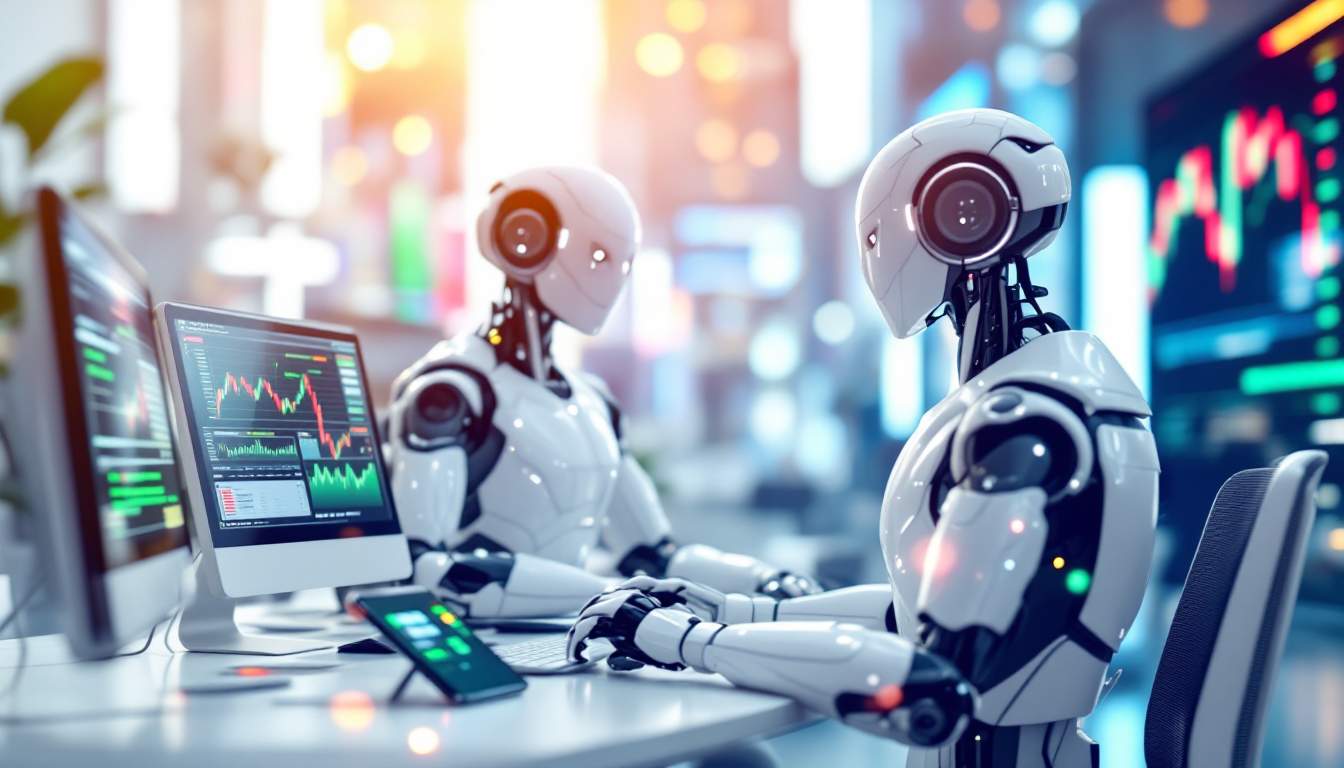
In the fast-paced world of financial markets, milliseconds can determine success or failure. Traders no longer rely solely on gut instinct or traditional technical analysis. The next generation of strategy comes from artificial intelligence – adaptive, data-driven, and tireless. AI trading bots have become the backbone of a new era in market decision-making, capable of identifying opportunities, executing trades, and managing risks faster and more accurately than any human ever could.
From Algorithms to Intelligence
Before AI, algorithmic trading was based on rigid rule sets – if this, then that’s logic that could execute orders efficiently but struggled to adapt to changing conditions. Modern AI bots have evolved far beyond these constraints. Using machine learning, they continuously learn from data, detect subtle shifts in price action, and refine strategies over time.
This adaptive intelligence is what makes AI trading bots fundamentally different. Instead of reacting mechanically, they interpret data contextually – understanding when a pattern is meaningful and when it’s just noise. The result is more flexible and resilient trading, especially in unpredictable markets.
How AI Is Changing Market Strategy
Artificial intelligence is not just a tool – it’s an entirely new strategic paradigm. Here’s how it’s reshaping modern trading:
- Pattern recognition at scale. AI can process years of historical data, live order book movements, and sentiment signals in seconds. It identifies micro-patterns invisible to the human eye – correlations between assets, seasonal shifts, and even behavioral tendencies of other traders.
- Predictive modeling and probability forecasting. Instead of following fixed rules, AI trading bots operate on probabilities. They assign confidence levels to potential outcomes, allowing strategies to adjust dynamically as the market evolves.
- Real-time risk management. Advanced AI systems automatically rebalance portfolios, set adaptive stop-loss levels, and reduce exposure when volatility spikes. Risk is managed proactively, not reactively.
- Data diversity and contextual analysis. AI doesn’t just analyze prices. It incorporates social media sentiment, macroeconomic data, blockchain metrics, and global liquidity flows – building a holistic market model.
- Continuous optimization. Every trade becomes part of the bot’s feedback loop. The system learns from both wins and losses, constantly improving its logic. What was a losing setup yesterday might become a profitable pattern tomorrow.
The Competitive Advantage
AI-based strategies are quickly becoming a necessity, not a luxury. In a market where hedge funds, institutions, and private traders compete globally, the edge lies in speed, adaptability, and insight. AI trading bots can react instantly to market shocks, interpret complex data without fatigue, and maintain discipline when human emotion would typically interfere.
For retail traders, this levels the playing field. They can now access tools that once required expensive infrastructure and entire teams of analysts. AI democratizes high-frequency precision and professional-grade analytics, putting it directly into the hands of individual investors.
Beyond Speed: The Role of Human Oversight
However, AI doesn’t eliminate the need for human expertise. The best results come from collaboration – where human intuition meets algorithmic precision. Traders define goals, manage risk parameters, and provide contextual judgment. AI then executes those ideas with unwavering accuracy.
This synergy is what defines the future of market strategy: the hybrid trader – human creativity powered by artificial intelligence.
Ethical and Regulatory Perspectives
As AI becomes more embedded in trading, transparency and accountability gain importance. Regulators increasingly focus on model explainability – understanding <em>why</em> an algorithm made a specific decision. Ethical AI development ensures fair competition, prevents market manipulation, and builds trust between technology providers and traders.
Responsible platforms are already taking steps to meet these standards. Tickeron, for example, integrates financial learning models (FLMs) with transparent performance analytics, allowing traders to evaluate each bot’s logic, accuracy, and long-term profitability. This type of accountability is critical for maintaining both compliance and confidence.
The Future: Intelligent, Autonomous, and Accessible
AI trading bots are evolving into autonomous agents that will soon manage complete portfolios with minimal input. As computing power grows and models become more sophisticated, the distinction between human and algorithmic trading will blur. Traders will no longer ask whether to use AI – they’ll ask how to use it most effectively.
The rise of artificial intelligence has redefined not just how trades are executed, but how strategies are conceived, tested, and improved. What once required instinct and reaction now demands adaptation and precision.
In this new landscape, those who embrace AI aren’t replacing human skill – they’re enhancing it. The traders of the future won’t compete against machines. They’ll collaborate with them.