
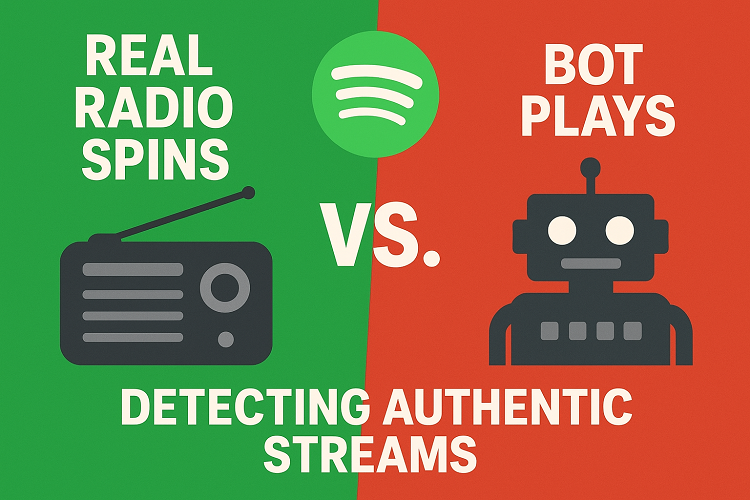
In the streaming world, success on platforms like Spotify is often judged by play counts, playlists, and algorithmic traction. Unfortunately, all streams are not created equal real spins from real listeners help generate growth and develop careers, but artificial “bot plays” can artificially inflate numbers and misinform reality. It’s vital for artists, labels, and Spotify to understand the difference between the two.
The Authentic Listener
Real streams come from genuine user behavior regardless of whether the user finds a song through an editorial playlist, through a friend’s recommendation, or organic radio spins. When a listener plays a track intentionally, to save it or add it to their own playlists, you can see authentic behavioral engagement.
These listener behaviors contribute to the latter aspects of customer engagement: Spotify’s Recommendation Engine, or why some tracks show up on Release Radar or Discover Weekly.
The Lure of Artificial Plays
With the rise of competition, some artists are now resorting to dodgy services that offer thousands of plays overnight. These “streams” come from bots or fake accounts, and happen through played songs that are on repeat programs. The “plays” that come from bots inflate the actual play count on songs, but provide absolutely no real engagement or revenue from actual fans.
While it may give the artist a sense of success, this method erodes their credibility as a musician, and it may be a violation of Spotify’s terms and conditions, which could lead to removal of the artist’s song altogether or worse penalties.
How does Spotify spot fraudulent activity?
Spotify has spent millions on developing algorithms and machine learning methods to recognize abnormal behaviors. Streaming data from various indicators like, skip rates, time spent in songs, listener demographics, and sources of play, can all lead Spotify to better assess whether streams indicate human behavior or not.
Creators will sometimes see a spike in streams from the same IP address or the number of streams in comparison to saved songs dramatically outpaces like or save ratio. Any attempt to manipulate listeners or play counts (like repeat plays) can and will be flagged. Once the integrity of the data has been filtered, Spotify is then able to uphold the validity of the charts, distribute royalties relatively, as well as create clarity for the artist within the platform.
Consequences of Streaming to Artists and the Industry
Authentic streams signal audience engagement, and this authentically built engagement brings longevity. Fans who discover and truly enjoy a song are more likely to follow an artist, go to shows, and engage on social media. On the flip side, if an artist relies on bot plays, they risk damaging their own reputation as well as missing out on opportunities with labels and playlist curators. Authentic or real insights are used to make conclusions about campaigns and marketing strategies, and if the insight is not accurate, then the artist can lose valuable momentum.
An Artist’s Responsibility for Transparency
For artists, the next step is simple: organic reach through authentic music, impactful marketing, and building community. Encouraging real engagement such as sharing stories, teaming with other creators, or even targeting a niche audience, will create a community of real fans that a bot will never produce.
In a time where numbers and rankings rule, authentic music will always be the true measure of success. Real listeners, not inflated stats, are what drive our careers as well as sustain the Spotify music ecosystem.