
Gold has survived empire collapses, debt crises, and countless Silicon Valley hype cycles. Its resilience is why traders from Lagos to London still treat the yellow metal as portfolio insurance and a speculation vehicle rolled into one. Yet many newcomers feel lost the moment candlesticks start dancing against headlines about rate hikes or wars. This roadmap stitches together timeless concepts, showing how to treat gold not as a hunch but as a disciplined business. By the end, you will know which routines stay useful no matter how wild the chart gets.
Best Gold Trading Strategy for Beginners
The best strategy is to trade with the trend on the daily chart while using the four-hour window for precise entries. First, mark the 50-day and 200-day moving averages; when price sits above both, see every dip as a potential buy, and when it rests below, treat rallies with suspicion. Next, pair that directional cue with the last major support or resistance level, so your stop sits beyond a zone the market already respects. Finally, risk no more than one percent of equity per trade—small sizing keeps early mistakes from becoming show-stoppers.
Equally important is platform simplicity. Whether you favour MetaTrader, TradingView, or a broker’s web terminal, learn every shortcut until charting feels like muscle memory. That familiarity frees mental bandwidth to track spreads, rollover costs, and news flashes without fumbling with interface quirks. Keep screenshots of each setup, because reviewing them later speeds the move from theory to instinct. In short, marry clear structure with aggressive self-critique, and beginner status melts away faster than you expect.
Timing Entries With Evergreen Patterns
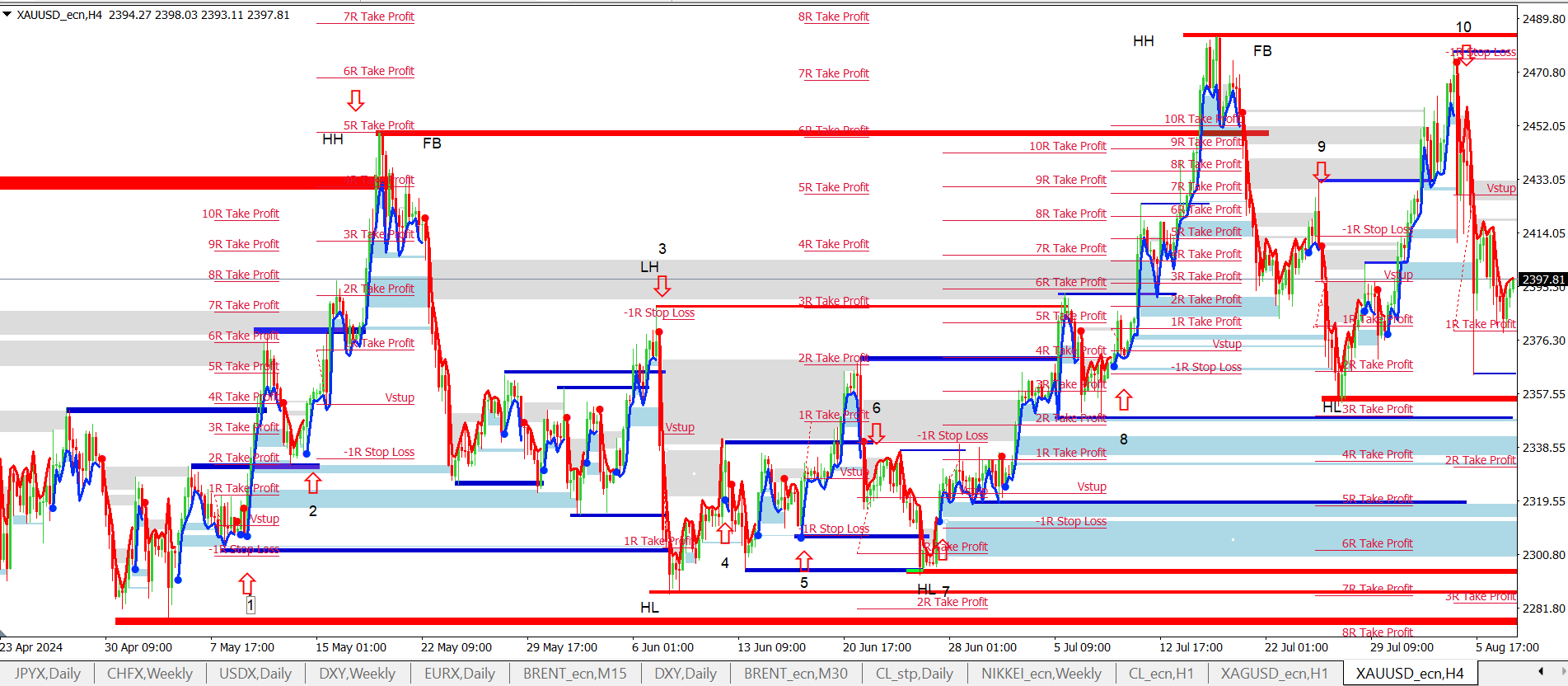
Many retail traders chase momentum but ignore context. A cleaner approach is to blend high-time-frame bias with pattern recognition, then let evergreen gold trading strategies guide the exact moment you pull the trigger. Think of a bullish engulfing candle forming right on the 50-day average after a week-long pullback; the confluence is your green light, not the candle alone. Such setups appear in every decade, even when volatility fireworks distract the crowd.
Patience remains the hidden edge. Wait for the New York open when liquidity deepens, and avoid taking fresh trades minutes before a U.S. jobs report. If you do enter ahead of news, cut position size in half. Consistency blooms when you care less about today’s drama and more about stacking dozens of statistically sound bets through the quarter.
Tools That Sharpen Your Market Edge
Modern traders command an arsenal that was science fiction twenty years ago. Before risking capital, assemble the essentials below so analysis and execution flow without friction:
- A multi-asset platform such as MetaTrader 4 for live charting and one-click orders
- A TradingView watch-list synced to your phone for weekend mark-ups
- An Instagram feed curated to follow only reputable macro analysts and not hype pages
- A VPN to dodge local internet outages and keep your connection stable during volatile moves
- A journal app that prompts you to log emotions as well as entry and exit data
These five tools combine to strip out guesswork and bad information, letting skill—not noise—drive decisions. They also help when you need quick peer feedback; posting a chart to a small, serious Instagram group can surface a blind spot before it hurts your wallet.
Risk Management Principles That Never Age
Ask any veteran: trading success is ninety percent defence. Start by calculating dollar risk first, percentage risk second, and lot size last; that order prevents account-killing surprises. A common template is 1R = risking $50 on each setup no matter how “certain” it looks. Over one hundred trades, even a modest edge of 55 percent wins can grow an account smoothly.
Another timeless rule is position correlation. Holding three longs in gold, silver, and the miners ETF might feel diversified, yet a single headline about a stronger dollar could sink all three together. Aim for exposure baskets that do not move in lockstep so your equity curve looks like a staircase, not a roller coaster. In practice, that means balancing precious metals with uncorrelated instruments such as agricultural commodities or cash.
Reading Macroeconomic Signals
Gold reacts to real yields, geopolitical tension, and, lately, social-media sentiment. When Meta’s earnings point to aggressive metaverse spending, tech stocks can wobble and push capital into safe havens—including bullion. Equally, a viral Instagram clip of a central-banker slip-up can spark intraday spikes if algorithms latch onto the quote. Staying informed no longer means scrolling dry press wires; the signal now hides in unconventional corners.
Yet fundamentals alone do not pay the bills. Blend them with technical confirmation: if U.S. ten-year yields break lower and gold prints a higher low on the daily, that double cue offers high-probability upside. Let macro steer the watch-list, but let the chart decide the precise moment to act. Done properly, fundamentals and price action form a feedback loop that helps, rather than hinders, decisive trading.
Gold Price Cycles in Numbers
Market memory shows that bull and bear stretches often last longer than intuition suggests. The table highlights six landmark cycles and the raw math behind them:
| Cycle | Years | Start Price (USD/oz) | End Price (USD/oz) | % Move |
| Bull Run post-Bretton Woods | 1971 – 1980 | $40 | $850 | +2,025 % |
| Secular Bear | 1980 – 1999 | $850 | $255 | −70 % |
| Millennium Bull | 1999 – 2011 | $255 | $1,900 | +645 % |
| Post-QE Bear | 2011 – 2015 | $1,900 | $1,050 | −45 % |
| New Bull Phase | 2015 – 2020 | $1,050 | $2,070 | +97 % |
| Record-High Surge | 2020 – 2025 | $2,070 | $3,038 | +47 % |
The explosive 1970s rally capped at $850 on 21 January 1980, while July 1999 marked the washout below $255 that ended the two-decade bear. Likewise, gold’s intraday record near $1,900 hit on 5 September 2011, and the recent spike past $3,000 in March 2025 reflects renewed geopolitical stress. Studying these swings grounds expectations; no setup looks outsized once you see what history already delivered.
Psychological Discipline for Volatile Sessions
Charts may flash green, yet your mind often triggers the real ambush. Build a pre-trade checklist that starts with a two-minute breathing drill; slowing the heart rate lowers the urge to revenge-trade after a loss. Next, decide in advance what market event will make you walk away for the day, whether that is two stop-outs in a row or hitting daily profit target. Sticking to these guardrails separates consistent operators from impulsive tourists.
Accountability accelerates mastery. Share weekly P/L screenshots with a trusted peer, or post them to a private Instagram story where friends can keep you honest. Public exposure feels uncomfortable, yet that sting forges discipline quicker than any textbook. Remember: the goal is not flawless trades but a process sturdy enough to survive cluster mistakes.
Continuous Improvement Loop
Edge decays if you freeze in last year’s playbook, so treat learning as an endless sprint. Replay all filled orders every Sunday, tagging patterns that repeat—good or bad. When a theme shows up five times, run small back-tests and either formalise it into system rules or stamp it out. Progress isn’t glamorous; it is granular.
Finally, plug into advanced MetaTrader communities such as MQL5 Community or NexusFi, where traders dissect order-flow quirks before they hit mainstream media. Each fresh insight should translate into a tweak—maybe a tighter stop, maybe skipping the Asian session—anything that edges probability fractions in your favour. Over months those tiny gains stack into the kind of equity curve that lets traders sleep well, regardless of tomorrow’s headline.