
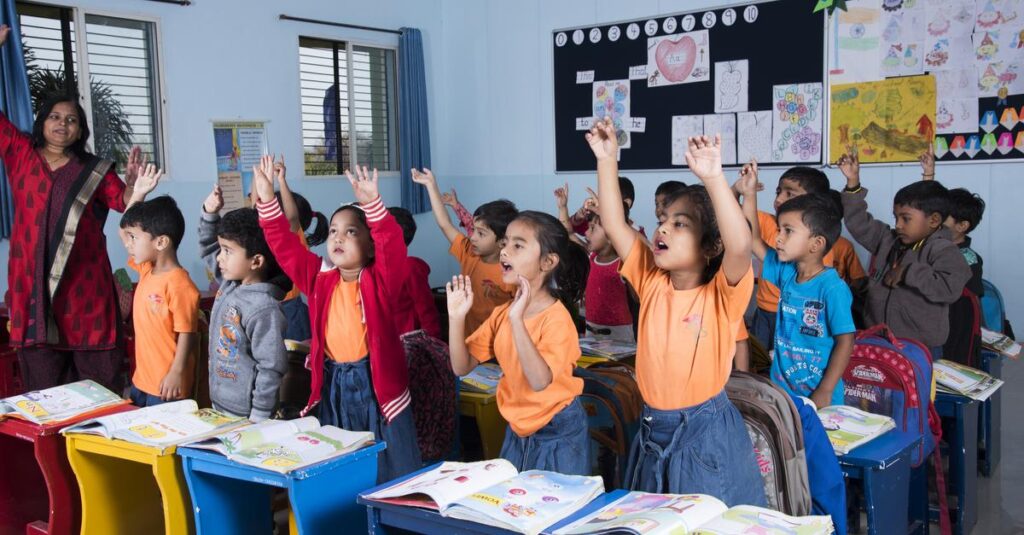
Education is often described as the great equalizer, a fundamental human right that unlocks potential and paves the way for a brighter future. Yet, its true value extends far beyond grades and certificates. It is a lifelong journey that shapes our character, hones our intellect, and empowers us to navigate the complexities of the world. In an era of rapid technological advancement and global interconnectedness, the role of education has never been more critical. It is the cornerstone of personal development, societal progress, and economic stability.
More Than Academics: The Holistic Purpose of Education
At its core, education is about more than just absorbing facts and figures. A robust educational framework cultivates critical thinking, the ability to analyze information objectively, and solve problems creatively. It moves students from simply “knowing what” to understanding “why” and “how.” This skill is indispensable in a world saturated with information, where discerning truth from misinformation is a daily challenge.
Furthermore, modern education is instrumental in fostering essential life skills. Collaboration, communication, adaptability, and empathy are nurtured in classrooms and lecture halls. Through group projects, debates, and extracurricular activities, students learn to work with diverse individuals, express their ideas clearly, and respect differing viewpoints. This social and emotional learning is as crucial as academic knowledge, preparing individuals to be conscientious and productive members of society.
The Economic Imperative of a Skilled Workforce
From a macroeconomic perspective, education is the engine of a nation’s prosperity. A well-educated populace is the backbone of a skilled, innovative, and competitive workforce. Countries that invest heavily in their education systems tend to experience higher rates of economic growth, lower unemployment, and greater technological innovation. It equips individuals with the specialized skills needed to thrive in a dynamic job market, from traditional trades to cutting-edge fields like artificial intelligence and biotechnology.
For the individual, the correlation between education and economic opportunity is clear. Higher levels of educational attainment are strongly linked to increased earning potential, better job security, and improved quality of life. It opens doors to careers that are not only financially rewarding but also personally fulfilling. By reducing barriers to opportunity, education is a powerful tool for breaking cycles of poverty and promoting social mobility.
The Digital Revolution in Learning
The landscape of education is undergoing a profound transformation driven by technology. Digital classrooms, online courses, and interactive learning platforms have made education more accessible than ever before. Students in remote areas can now access world-class resources, and professionals can upskill without putting their careers on hold. This shift towards e-learning democratizes knowledge, breaking down geographical and socioeconomic barriers.
However, this digital revolution also presents new challenges. The digital divide—the gap between those with and without reliable internet access and technology—threatens to create new forms of educational inequality. Therefore, a key focus for the future must be on creating inclusive, hybrid models of education that leverage technology while ensuring no learner is left behind.
The Lifelong Learning Mindset
Finally, it is vital to recognize that education is not confined to the first two decades of life. The concept of lifelong learning has become a necessity. In a world where industries evolve and new ones emerge overnight, the ability to continuously learn, unlearn, and relearn is the ultimate survival skill. Continuous education, whether through formal courses, professional workshops, or self-directed study, allows individuals to remain agile and relevant throughout their careers.
In conclusion, education is the bedrock upon which we build our future. It empowers individuals, strengthens communities, and drives economies forward. It is an investment with immeasurable returns, fostering not just smarter workers, but wiser, more engaged citizens. By championing accessible, high-quality, and holistic education for all, we are not just teaching facts; we are cultivating the innovators, leaders, and problem-solvers who will shape a better tomorrow for everyone.