
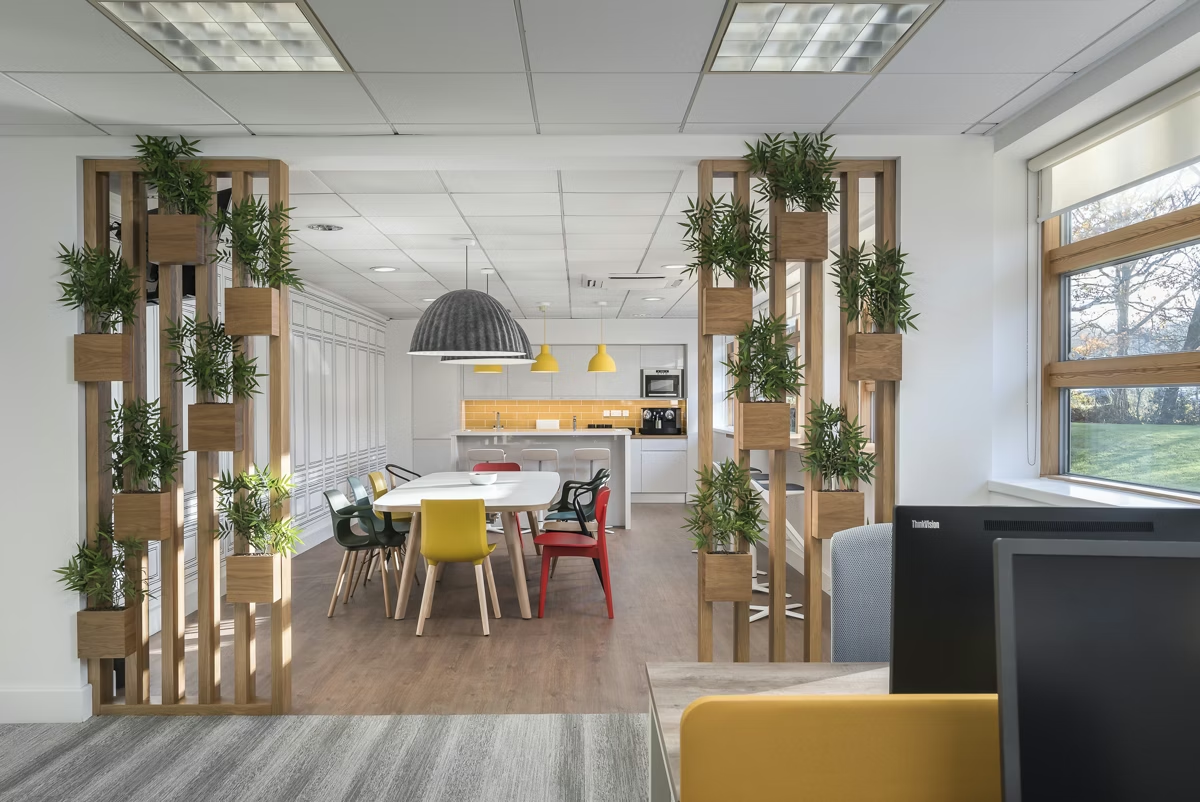
Most of the offices nowadays resemble a jigsaw puzzle placed in a place where it was never intended to belong. We squeeze workstations into crannies and question why we are sapping all our energy by lunchtime. High-performance design is not about furniture, but rather about the friction or specifically, the complete absence of friction in the day-to-day workflow. When you design around the natural rhythm of a human’s day, then the workspace begins to become a high-performance workspace instead of merely a basic office setup.
This involves a proper plan and design of layout and light that extends way past aesthetics. It transforms a simple floor plan into a practical productivity asset. In competitive business hubs, finding office interior designers in Indore who can balance these technical requirements with a distinct brand voice is the first step toward building a long-term functional value. The intention here is to design a space that supports the workload structurally, leaving the workforce to work at what they are supposed to do.
The Evolution from Square Footage to Efficient Space Usage
We need to retire the outdated idea that an empty desk represents a wasted dollar in the corporate budget. High-performance design prioritizes efficient space use over team size. It is about whether a space allows for deep focus, rapid-fire collaboration, and quiet decompression all within the same afternoon. If a workspace does not allow an employee to shift their environment when their specific task changes, the office is essentially failing its users. This evolution treats every square foot as a usable work area rather than just a basic measurement for real estate efficiency.
Functional Zoning: The Subtle Layout Signals
Zoning is the hidden architecture that instructs our brains on how to act without the need for explicit instructions. It incorporates light, sound and visual stimuli to form focused work zones that eliminate the tiresome nature of making decisions all day long. Switching to a low-light, low-noise focus pod, where social interaction cues are absent, your mental focus resets to suit the new setting. It is not simply a design decision that is stylistic, it is a productivity trick supported by the current discoveries in design research. Great design involves these transitions to help the workforce navigate their day so that each zone is used to a specific work function.
Adaptable Designs
Occupancy data is analyzed to determine the locations of bottlenecks and the location of the dead zones at various times of the day. Modular furniture and mobile partitions enable a team to rearrange their entire space within minutes to either have a creative sprint or a formal presentation. It is concerned with the process of creating an environment that can be stretched to accommodate the ambition of the business without necessarily having to renovate the entire space.
The Significance of Material Selection, Feel and Texture
Velvets or matte woods are chosen for performance beyond appearance. The materials have a feel-good quality that puts us in a highly digitalized world and absorbs light and sound more than plastic. These decisions convey to us a sense that a particular space should either be taken up with deep relaxation or long-term hard work without written instructions. It is a comfort layer that makes a modern office not like a sterile and clinical laboratory, or a generic waiting room.
Defining the Best Office Interior Design in Indore
Achieving a top-tier workspace means looking far beyond the standard catalog of cubicles and whiteboards. The best office interior design in Indore focuses on creating a premium workplace identity, a space that feels polished and high-end but is also deeply comfortable to inhabit. It is a delicate balance of architectural adaptability and brand symbolism that makes the office a destination for talent rather than a mandatory chore. When employees feel a genuine visual and emotional attachment to their environment, the design has succeeded on a fundamental human level. This is where technical precision meets the reality of modern lifestyle choices, elevating the daily professional experience.
Brand Symbolism and Visual Identity
Achieving a top-tier workspace also requires translating brand values into design expression. Visual tone, material palette, and layout rhythm all contribute to how people emotionally read a workplace. These cues shape perception without formal messaging. A space can communicate stability, creativity, or structured design discipline through design alone.
Lifestyle Alignment in Office Planning
Modern offices increasingly respond to lifestyle shifts such as hybrid schedules and wellness awareness. Breakout zones, quiet pods, and informal collaboration corners reflect this shift. Planning that respects daily human rhythm produces better adoption. Spaces get used as intended rather than avoided.
Final Thoughts
The objective of modern space optimization is to establish a working environment that supports visual and emotional connection. Whether the hub is tech-heavy or a small creative studio, the focus should remain on how the workspace aligns with human rhythm. For organizations redefining their corporate presence and identity, consulting with office interior designers in Bhopal can add essential local context to a customized outcome.