
Choosing the right portable charger goes beyond capacity and price. Whether you’re a tourist, student, or remote worker, a dependable power bank keeps your gadgets charged when you need them the most. However, not all models have the same quality or performance. Building materials, safety systems, and smart charging capabilities all have a big impact on your experience. Before purchasing, it is critical to assess certain design and safety features to ensure you are receiving good value for your money. This article breaks down the most important aspects to look for, allowing you to confidently choose the finest power bank for your requirements.
How Do Build Quality and Design Affect Performance?
Size, Weight, and Portability Trade-Offs
Compact power banks are easier to transport, although they frequently have lower capacity. Larger versions can charge your gadgets several times, but their size might be cumbersome for regular use. If you’re commuting or traveling, you’ll want something compact that can fit in a pocket or backpack. Frequent fliers may select devices with airline-safe capacity below 100Wh. Determine how much power you genuinely require each charge and how much weight you are prepared to carry. A small 10,000mAh device is ideal for short travels, whilst a 20,000mAh type is ideal for extended trips. Balancing power requirements with mobility allows you to avoid needless bulk and underperformance on the road.
Material Durability and Heat Management
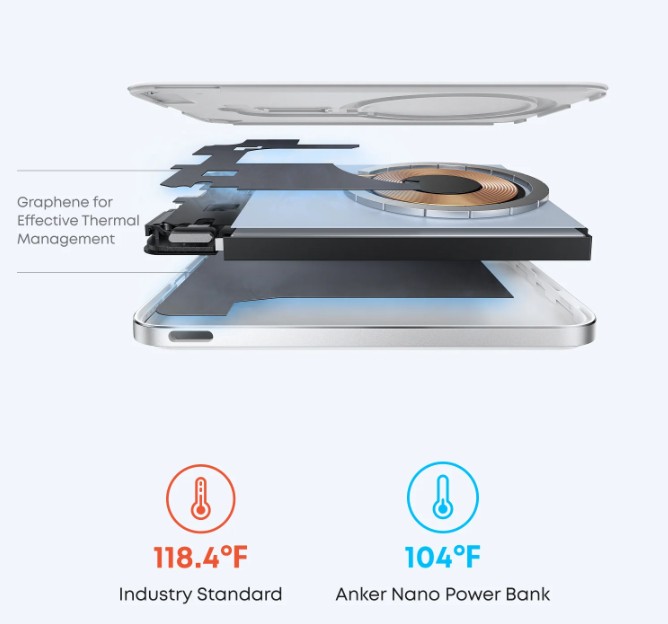
The exterior shell of a power bank serves more than simply aesthetic purposes; it also protects the internals from drops, pressure, and regular wear. Aluminum casings dissipate heat more effectively than plastic casings, although they may be heavier. Reinforced corners or shock-resistant features improve outdoor durability. Ventilation and internal heat sinks assist in managing temperature and protect the battery from harm during fast charging. Heat accumulation can accelerate the degradation of lithium-ion batteries, limiting their lifespan. Some types use cooling gels or sophisticated circuitry to better regulate thermals. To guarantee constant performance, choose a power bank with strong construction and established thermal management, particularly while charging at fast speeds or utilizing many ports at the same time.
LED Indicators, Displays, and Smart Features
LED indications show the remaining battery life, while more modern power banks include digital displays that provide accurate percentage readings. This allows you to better understand when to recharge. Smart features such as auto on/off functionality save battery waste. Some types recognize the connected device and change the voltage or current to improve charging efficiency and battery health. Pass-through charging allows you to charge the power bank and your smartphone simultaneously. Modern power banks have premium features such as mobile app integration, USB-C PD compatibility, and customizable output settings. These advancements increase convenience, efficiency, and overall user happiness.
Why Safety and Compatibility Should Be Top Priorities
Short-Circuit, Overheat, and Surge Protection
Built-in safety procedures protect both your gadgets and the power bank. Look for models that include short-circuit protection, which turns off the output when aberrant currents are detected. Overheat prevention is critical for fast-charging power banks since high temperatures might cause irreversible battery damage or possibly a fire danger. Surge protection protects your equipment from power spikes caused by rapid voltage fluctuations. These characteristics are frequently regulated by internal processors, which monitor real-time circumstances and change output accordingly. Reputable companies make these safeguards explicit in their specifications. Prioritizing safety features helps prevent accidents and extends the life of your power bank and gadgets.
Device Compatibility and Universal Charging Standards
Modern devices support a variety of charging methods, including USB-A, USB-C, Power Delivery (PD), and Quick Charge. A decent power bank should have several outputs and intelligently determine which charging protocol is optimal for each connected device. USB-C PD offers quicker, more efficient charging of laptops, tablets, and newer smartphones. Universal compatibility guarantees that your power bank does not become obsolete as technology advances. Multi-port choices allow you to charge many devices without slowing down performance. Avoid restricted versions with set output voltages or amps. Always verify the supported charging protocols to guarantee a smooth pairing with your phone, laptop, earphones, and other everyday tech requirements.
Certifications, Warranty, and Trusted Brands
Certifications such as CE, FCC, and RoHS certify that a power bank fulfills international safety and environmental requirements. UL certification, particularly for lithium-ion batteries, increases dependability. Always pick brands that explicitly identify their compliance and offer a one-year warranty. Trusted manufacturers like Anker stand behind their devices with excellent customer service and long-term performance histories. User feedback can provide insight into real-world dependability. Cheap, uncertified power banks may save money initially, but they are dangerous. Investing in a recognized brand with a track record guarantees your device’s safety and long-term usage.
Conclusion
Not all power banks are created equal, and understanding their qualities is critical to choose the correct one. From design and mobility to safety mechanisms and universal compatibility, each piece contributes significantly to total performance. Don’t only look at capacity and pricing; also consider material quality, protective features, and compatibility with contemporary charging standards. Prioritize reliable brands with certificates and warranties. A well-rounded power bank will not only charge your gadgets reliably, but will also provide you with peace of mind wherever you go. Make an informed selection, and your power bank will last for years.