
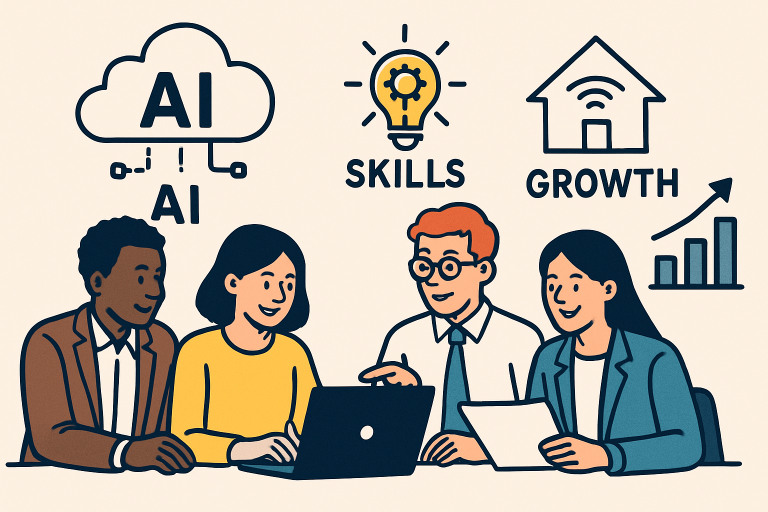
Key Takeaways:
- Embracing AI and automation enhances recruitment efficiency and candidate experience.
- Skills-based hiring broadens talent pools and focuses on practical competencies.
- Integrating the gig economy offers flexibility and access to specialized skills.
- Remote work opportunities attract diverse candidates and improve work-life balance.
- Investing in upskilling and reskilling fosters internal talent development and retention.
The talent acquisition landscape is evolving faster than ever. To stay competitive and build effective teams, organizations must adapt to major changes in how they find, assess, and retain top talent. Success now depends on understanding the crucial role of tools and strategies like recruitment software to navigate a rapidly shifting global workforce.
Market shifts, economic uncertainties, and increased candidate expectations make it essential for employers to reassess both current and future hiring methods. Strategies that worked in the past, such as strict degree requirements or only in-person work, may no longer attract the most qualified or engaged candidates. Companies are reexamining their practices, redesigning the candidate experience, and adopting more flexible talent acquisition strategies.
Using advanced data analytics, artificial intelligence (AI), and automation has become key to streamlining processes from talent sourcing to onboarding management. At the same time, employers need to stay aligned with broader trends: emphasizing skills, embracing non-traditional work arrangements, and genuinely committing to diversity and growth within teams.
These strategic changes not only boost organizational agility but also foster workplaces where employees can excel and contribute at their best. Innovative leaders are utilizing new tools and best practices to attract top talent and prepare their teams for sustained success.
Leveraging AI and Automation in Recruitment
Artificial intelligence and automation are now at the heart of recruitment innovation. Automating repetitive manual tasks, such as resume screening and interview scheduling, boosts team productivity and allows recruiters to focus on building candidate relationships. AI-driven tools, including natural language processing and predictive analytics, can quickly sift through thousands of applications to highlight those most likely to succeed in a given role. According to Forbes, AI is redefining hiring in the digital age, helping organizations expedite the hiring process while reducing unconscious bias in early screening stages, making recruitment more equitable and data-driven.
Organizations that invest heavily in AI-powered hiring solutions are seeing dramatic improvements in time-to-hire and candidate quality, while elevating the employer brand through a more personalized, responsive process.
Adopting Skills-Based Hiring Practices
Modern organizations are shifting away from traditional degree requirements and placing greater emphasis on practical skills. Skills-based hiring involves evaluating candidates based on demonstrated competencies—such as problem-solving, project management, coding, or communication—rather than focusing primarily on education or years of experience. This approach opens the door to a much broader, more diverse talent pool, giving organizations access to individuals whose abilities closely align with business needs.
By prioritizing what candidates can do rather than merely what credentials they hold, companies can quickly identify talent that fits both job requirements and organizational culture. This also enhances social equity by leveling the playing field for non-traditional applicants.
Integrating the Gig Economy into Talent Acquisition
The gig economy, made up of freelancers, independent contractors, and temporary project workers, is growing worldwide. Companies that use this expanding workforce gain from more adaptable talent strategies and can access specialized skills whenever needed. Hiring for specific projects allows businesses to quickly adapt to market changes, fill skill shortages efficiently, and better control labor expenses. As HR Dive reports, it’s crucial for organizations to stay updated with recruitment technology to effectively engage gig workers and simplify project hiring. Successfully integrating gig talent also requires clear onboarding, strong project management, and inclusive policies that regard freelancers and contractors as part of the team.
Embracing Remote Work Opportunities
Remote work options have become a decisive factor for potential employees, especially as people increasingly value work-life balance and autonomy. By removing geographical restrictions, organizations can tap into talent pools beyond their immediate location, promoting greater diversity and inclusion. Studies show remote employees often report higher productivity and job satisfaction, which can translate to better business outcomes.
While not all roles can be performed remotely, offering flexible arrangements—such as hybrid models—remains advantageous for companies striving to meet evolving workforce expectations. To thrive, organizations need strong digital collaboration platforms and proactive communication strategies to keep remote teams engaged and productive.
Investing in Upskilling and Reskilling
Continuous employee development is essential as technology advances and new skills become necessary. Upskilling focuses on enhancing existing competencies, while reskilling equips staff for entirely new roles or domains. Both approaches help close skills gaps, boost internal mobility, and improve retention rates. Strategic onboarding, personalized learning paths, and mentorship programs greatly contribute to developing a future-ready workforce.
Fostering Employee Advocacy
Employee advocacy programs empower staff to share their positive workplace experiences, organically strengthening the employer brand and attracting top talent. Genuine stories and testimonials resonate with candidates more than corporate marketing, building credibility and trust in the organization’s culture.
Encouraging employees to become brand ambassadors through social media and professional networks expands reach and credibility. When employees enthusiastically share their successes and growth within a company, prospective hires see a compelling vision of their own future.
Implementing Strategies for Diverse Talent Selection
Building truly diverse teams requires a deliberate, data-driven approach to talent selection. Advanced analytics and smart algorithms can help leadership visualize and balance the tradeoffs between cohort talent and diversity, leading to more equitable hiring decisions. This aligns with broader organizational goals around innovation, equity, and world-class performance.
Organizations increasingly deploy unbiased, structured interview techniques and blind recruitment methods to counteract traditional biases. Using these data-backed processes builds a stronger, more diverse talent pipeline and demonstrates a strong commitment to diversity and inclusion.
Conclusion
Building outstanding teams in today’s evolving talent landscape requires a holistic approach—one that leverages AI, values skills, embraces flexibility, invests in growth, empowers advocates, and fosters diversity. By remaining agile and forward-looking, organizations can attract exceptional talent and secure their place at the forefront of industry innovation.