
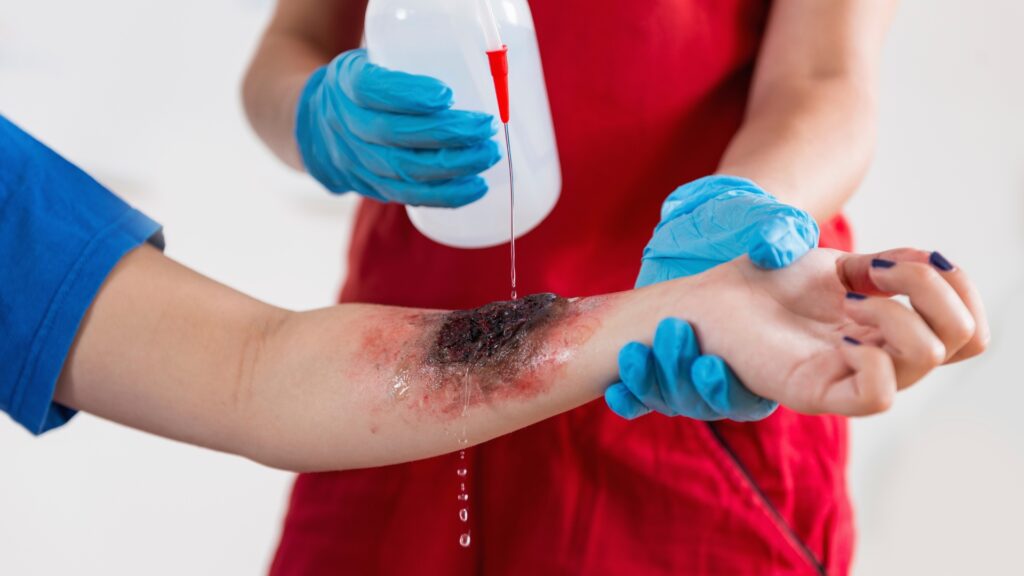
Chemical burns and hazardous material exposure can happen in an instant—at work, at home, or in public spaces. Everyday substances such as cleaning agents, pool chemicals, or industrial products can cause serious injuries if mishandled. Unlike thermal burns, which come from heat, chemical burns result from corrosive reactions that continue damaging tissue until the chemical is fully neutralized or removed. Knowing how to act quickly and correctly in these emergencies is essential to prevent long-term harm and minimize complications.
Understanding Chemical Burns and Exposure
Chemical burns occur when skin, eyes, or internal organs come into contact with irritants like acids, alkalis, or solvents. The severity of the injury depends on the chemical type, concentration, duration of contact, and how quickly treatment begins. Alkalis, such as ammonia or bleach, often cause deeper burns than acids because they penetrate tissue more aggressively. Hazardous material exposure can also involve inhalation or ingestion of toxic substances, which may damage the lungs or digestive tract.
Common sources include:
- Industrial cleaning products and solvents.
- Household drain cleaners, bleach, or oven sprays.
- Battery acid or car maintenance fluids.
- Agricultural fertilizers and pesticides.
Recognizing the Signs of Chemical Burns
Symptoms may appear immediately or develop gradually, depending on the chemical and exposure level. Typical signs include:
- Redness, pain, or burning sensations.
- Blisters or peeling skin.
- Swelling or discoloration at the contact site.
- Coughing or difficulty breathing if vapors are inhaled.
- Eye irritation, blurred vision, or tearing from splashes.
Severe exposures can cause shock, confusion, or even cardiac distress—especially if the chemical enters the bloodstream or affects respiration.
Step 1: Prioritize Safety
Before giving aid, ensure the scene is safe. Avoid contact with the chemical yourself—protective gloves, masks, or eyewear should be used if available. If the area is contaminated, ventilate it immediately by opening windows or moving the person to fresh air. Remove any nearby sources of the chemical to prevent continued exposure. Never rush in without protection; one rescuer’s exposure can create an additional emergency.
Step 2: Remove Contaminated Clothing
Carefully remove the victim’s clothing and accessories that may hold the chemical against the skin. Cut fabric away instead of pulling it over the head to avoid spreading the substance. Use gloves or cover your hands with a plastic bag for protection. Once removed, seal contaminated clothing in a plastic bag and keep it away from others.
Step 3: Rinse Thoroughly With Water
The most important step in treating chemical burns is flushing the affected area with running water. Use cool, clean water for at least 15–20 minutes to dilute and remove the chemical. This helps stop the reaction and reduce tissue damage. Do not use high-pressure water, as it can drive the chemical deeper into the skin.
Avoid neutralizing chemicals with other substances, such as applying vinegar to alkali burns or baking soda to acid burns—this can worsen the reaction. Only use water unless instructed otherwise by poison control or a medical professional.
Step 4: Eye and Inhalation Exposure
If chemicals enter the eyes, flush them with running water immediately. Hold the eyelids open and tilt the head so contaminated water drains away from the unaffected eye. Continue rinsing for at least 20 minutes. Contact lenses should be removed as soon as possible during rinsing.
For inhalation exposure, move the person to fresh air right away. Loosen tight clothing and encourage slow, deep breathing. If they experience dizziness, coughing, or shortness of breath, call emergency services. Oxygen may be required in severe cases.
Step 5: Cover the Burn and Prevent Shock
After rinsing, cover the affected area with a sterile, non-stick dressing or a clean cloth. Avoid ointments, creams, or butter—they can trap residual chemicals and increase infection risk. Keep the person still and warm to prevent shock. If the chemical involved is unknown or causes significant pain, blistering, or breathing difficulties, seek emergency medical care immediately.
Training and preparation make a critical difference in these situations. Programs offering First aid and CPR education teach individuals how to assess chemical burns, provide immediate care, and respond to hazardous material incidents safely. This knowledge empowers people to act confidently before professional responders arrive.
Step 6: Seek Professional Medical Care
Even if the burn appears mild, it’s vital to get medical evaluation. Some chemicals continue damaging tissues beneath the surface, leading to delayed symptoms or infection. Health professionals may need to irrigate the wound further, prescribe antibiotics, or administer tetanus shots. In severe cases, decontamination procedures, hospitalization, or surgery may be required.
If the person has swallowed a chemical, do not induce vomiting. Instead, have them rinse their mouth thoroughly with water and call poison control or emergency services for instructions. Provide details such as the product name, amount ingested, and time of exposure.
Preventing Chemical Injuries
Prevention is the best defense against chemical burns and hazardous exposure. Practical safety habits include:
- Reading and following warning labels on all products.
- Storing chemicals securely, away from children and pets.
- Wearing protective gloves, masks, and goggles during use.
- Never mixing cleaning products (especially those containing ammonia and bleach).
- Ensuring proper ventilation when using sprays or solvents.
Workplaces handling chemicals should enforce safety training, provide spill kits, and ensure easy access to eyewash stations and emergency showers.
Dealing With Hazardous Material Spills
In industrial or lab environments, hazardous material spills pose additional dangers. When dealing with a spill:
- Evacuate the area if fumes are strong or spreading.
- Notify supervisors or emergency personnel immediately.
- Avoid touching or walking through the material.
- If trained, use spill containment materials like absorbent pads or neutralizers.
Having emergency contact numbers and spill response procedures posted visibly ensures faster, safer action during critical moments.
Conclusion
Chemical burns and hazardous material exposures can escalate rapidly, but prompt and informed first aid can prevent serious injury. The key steps—removing contaminated clothing, rinsing thoroughly, and keeping the victim safe from further exposure—should be performed immediately while waiting for medical help.
Preparation and education save lives. Learning how to respond through certified first aid and CPR training gives individuals the confidence to act calmly in high-pressure situations. With awareness, protective habits, and readiness, anyone can help reduce the risks associated with chemical hazards and ensure faster, safer recovery when accidents occur.