
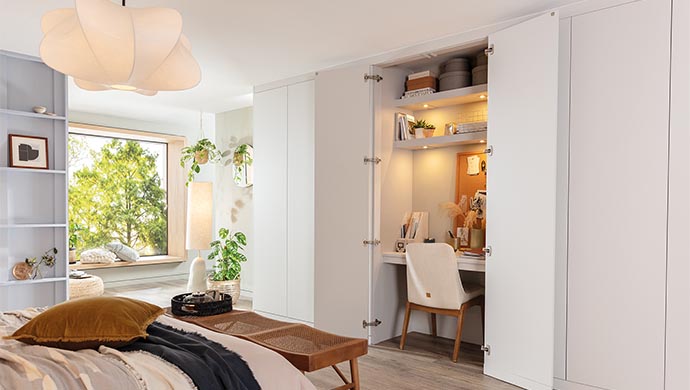
Storage in a busy family home works best when it’s planned around how the household really lives, which means the school bags, coats, shoes and toys that collect every day as well as the occasional change that needs room at short notice. Many homes have enough cupboard space on paper but too little of it close to where bags and coats get dropped, so the aim is a fixed place for each item at the point where it lands.
Space That Adapts When the Household Changes
Some households need to flex at short notice, whether that means grandparents staying for a few weeks, an adult child moving back or someone in the house becoming a foster care parent and welcoming a child whose belongings need a home straight away. A spare room with a bed, a wardrobe and a chest of drawers already in place makes these changes easier, and an empty drawer or a cleared shelf means clothes can be unpacked on the day. Keeping out-of-season coats and boxes in the loft or under the bed, rather than filling the spare wardrobe, leaves that room ready, and a few labelled boxes give a returning family member’s things somewhere to go while longer plans are made.
Give Daily Items a Home Near the Door
Most daily clutter in a family home comes through one door, and the things that arrive there tend to be the same every week, so it helps to give each type of item a fixed place near the entrance, such as:
- hooks at a child’s own height for bags and coats
- a closed cupboard or bench for school shoes, football boots and wellies
- a tray or basket for keys, post and letters from school
- a deep basket for sports kit and PE bags
Closed cupboards keep the floor clear, and expandable shoe storage adds room as feet grow and the number of pairs rises over the school year. Placing the bench where people sit to take their shoes off saves a trip across the hall and makes tidying a quick habit for everyone, including younger children. Wellies and gloves can move to a lower shelf in winter and a higher one in summer, which keeps the door area from filling up with things not in use.
Furniture That Does Two Jobs
Storage built into furniture saves floor space and sits right where the clutter already collects. Choose beds with drawers underneath for spare duvets and bedding, and an ottoman or a sofa with a lift-up seat for throws and board games. Low cube shelves with a labelled basket for each child let younger ones put toys away without help, and a wardrobe with a lower rail lets them hang up their own clothes, which spreads the tidying across the household.
Start with the spot that collects the most clutter, fix it first, and move on to the next once the new system has lasted a few weeks, since each small change shows what the household actually uses and what can be passed on or donated.