
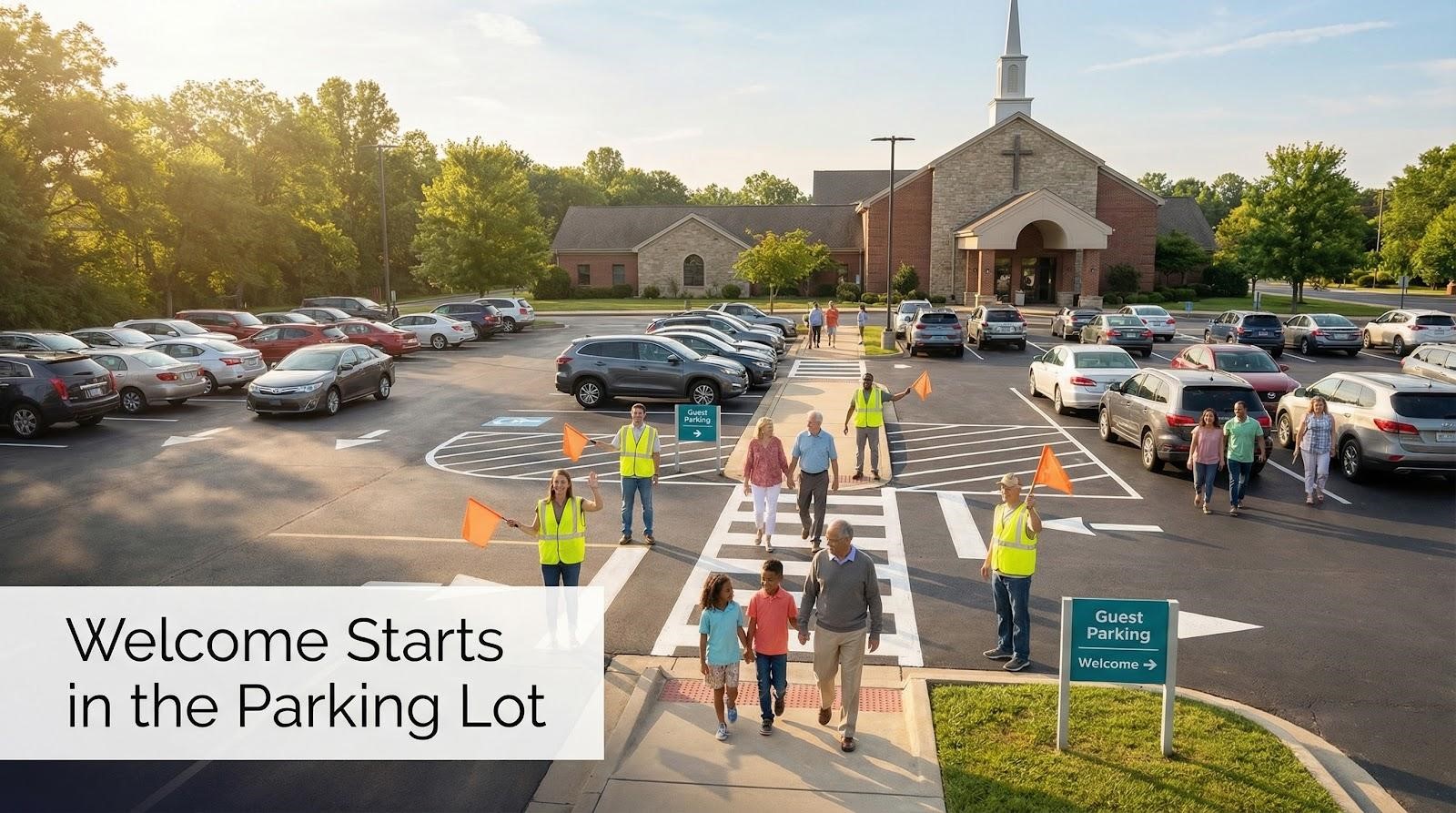
Parking sets the tone before anyone hears a sermon. When cars back up, visitors bail. Research shows that once a lot hits 70 percent capacity, most first-time guests stop searching and leave. That single stat turns a parking headache into a growth lid.
The upside? Churches now have access to pro-level parking management solutions—from full-service teams to smart sensors—that smooth traffic like a well-timed light. In this guide we’ll unpack seven options, telling you who they help, what they cost, and how they can turn your lot from logjam to welcome mat.
1. Bring in full-service parking management
The quickest fix for a complex lot is to hand it to specialists who manage traffic all week long. Providers of parking asset and facility management handle everything: staffing attendants, monitoring payment kiosks, and auditing ADA compliance, so you focus on ministry while a professional team keeps fender-benders, lines, and cash leaks off the agenda.
Seasoned operators carve out extra capacity by parking cars tighter and routing them through one-way aisles. Their playbooks cover holiday surges, overflow shuttles, and ADA compliance, so volunteers never scramble under pressure.
Because these firms control the gate, they also safeguard the till. Cashless systems record every transaction and produce clear financial reports. If you open weekday parking to the public, the same platform accepts cards or mobile wallets with no more envelopes at the entrance.
Outsourcing lowers risk. Attendants carry their own insurance, train for accident prevention, and follow strict safety checklists. That reduces the church’s liability and puts the board at ease.
The trade-off is cost. Full-service management is a premium line item, but for campuses juggling 1,000 cars across multiple services, the price of not fixing parking (lost guests, collisions, angry neighbors) can exceed the monthly fee.
If your lot already feels like a theme-park queue, bringing in the pros is the fastest path from chaos to calm.
2. Turn the lot into an app-driven concierge
Picture next Sunday. Before the first hymn, families tap a button, claim a space, and follow turn-by-turn directions straight to it. No circling, no guesswork, no paper permits on dashboards.
That ease is what church-focused platforms such as FaithPark provide. The software acts like a digital usher. Members reserve free stalls for worship, guests tap “first-time visitor,” and anyone attending a weekday event can pay instantly with Apple Pay or Google Pay.
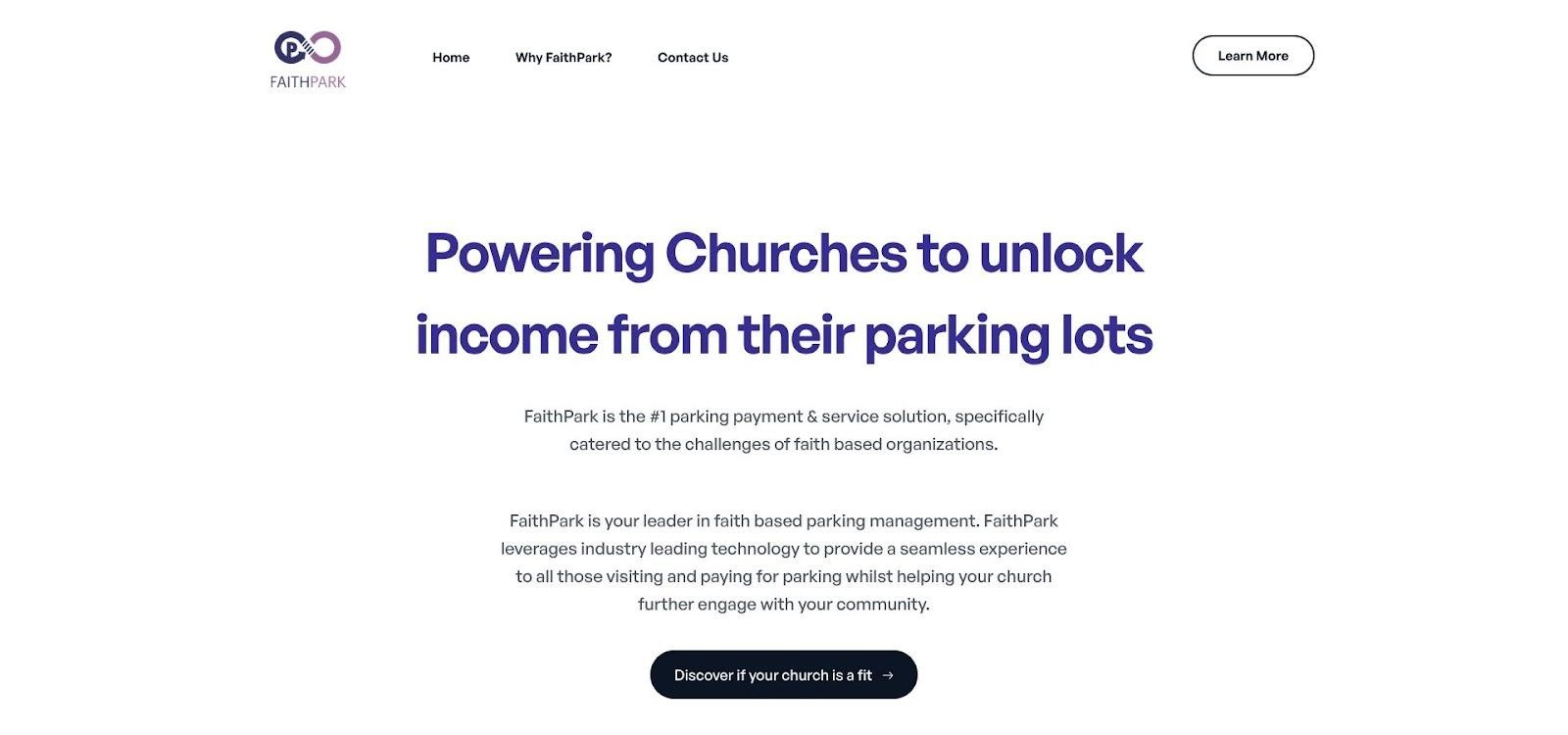
Because everything lives in one dashboard, you see real-time occupancy at a glance. If Lot A reaches capacity, the system redirects late arrivals to Lot B before they approach the main gate. Volunteers trade frantic radio chatter for calm phone updates.
FaithPark connects to popular church-management systems. When a new guest registers for parking, their contact record appears in your database ready for follow-up. The same workflow can guide drivers to your giving page or play a welcome video from the pastor while the family is still in the car.
Revenue management is just as smooth. Want to open the lot to downtown shoppers on Tuesday? Set the rate, pick the hours, and let the app handle payment and enforcement. Funds land in the church’s account without an orange cone or cashbox in sight.
Adoption requires a plan. Announce the app from the stage, post QR codes at entrances, and keep a few paper passes for seniors who prefer them. Once the congregation comes on board, the lot runs itself, and you collect data that shapes every future parking decision.
3. Monetize idle spaces with shared parking
From Monday to Saturday, many church lots sit half empty. Meanwhile, office workers circle the block and concert-goers pay premium rates down the street. Shared-parking platforms such as ParqEx connect those needs.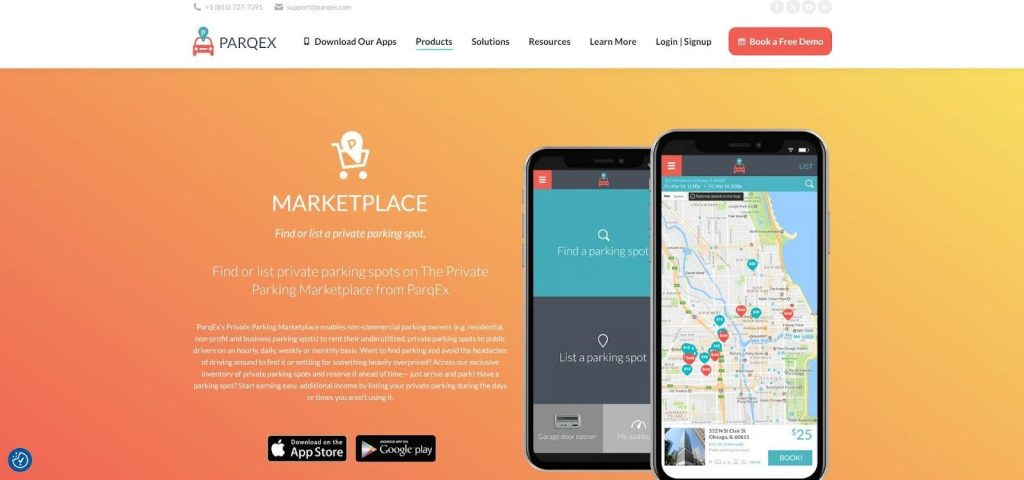
Setup is straightforward. You list the hours your spaces are free, set a price, and choose whether access happens through a smart gate, a license-plate list, or a simple windshield QR. Drivers reserve in the app, pay instantly, and receive directions that keep them out of Sunday-only zones.
Income is real, not pocket change. One Midwestern church near a football stadium earns about $3,000 every game day and funnels that cash into community outreach. For urban congregations, weekday commuters can turn an asphalt expense into a fresh budget line for missions, building repairs, or a new staff role.
Security improves, too. Because every vehicle in the lot appears in the ParqEx dashboard, you know exactly who belongs there at any hour. Unauthorized cars vanish, towing calls drop, and neighborhood friction over “free church parking” fades.
The best part is flexibility. Block out Easter week with two clicks, offer discounted rates to local teachers, or tie overflow parking for a funeral to a private booking link sent to family members. Your lot becomes a controllable resource instead of a constant headache.
When stewardship includes maximizing what you already own, turning pavement into predictable revenue is an easy win.
4. Guide every driver with real-time smart tech
What if the lot could talk? Sensors in every stall detect arrivals, overhead lights flip from green to red, and a digital sign at the entrance directs latecomers to open spaces in the east annex. Drivers stop circling, traffic calms, and the brake-light line on Main Street disappears.
Smart guidance matters because it trims search time by nearly 40 percent, according to a 2023 study from the International Parking Institute. Those saved minutes cut fender-benders and frustration.
Installation is simpler than it sounds. Wireless puck sensors adhere to asphalt, camera counters mount on light poles, and a compact server feeds live counts to the LED sign and a mobile dashboard your team checks from the lobby. If Lot A reaches capacity, ushers know instantly and redirect newcomers before congestion starts.
The same network captures history. Within weeks you’ll see which service fills fastest, how holiday traffic spikes, and whether Wednesday youth night truly needs the overflow lot. Data replaces guesswork, letting you assign volunteers and shuttle vans with precision.
Costs have dropped. Many vendors price per space and include software, so a mid-size church can roll out guidance in phases: begin with the busy front lot, then add auxiliary areas later. From the first Sunday, attendees feel the upgrade. They glide in, park once, and walk into worship already relaxed.
5. Redesign the lot for flow, safety, and first impressions
Technology helps, but paint, signs, and lights still set the stage for Sunday success. A quick walk of many church lots reveals fading stripes, confusing two-way aisles, and dim corners where guests hesitate to park. Small layout tweaks solve big headaches.
Start with traffic flow. Convert opposing aisles into a simple one-way loop to eliminate face-offs that stall the line. Angle stalls at 60 degrees so drivers slip in and out faster, then mark clear entrance-only and exit-only gates. Arrows on asphalt act like silent ushers.
Next, think people, not just cars. Bright crosswalks guide families from lot to lobby without darting between bumpers. Fresh LED fixtures wash the area in daylight-level brightness, reducing night-time trip hazards and theft risk. When pedestrians feel safe, they linger to chat instead of rushing off the property.
Accessibility comes third but matters just as much. Add extra accessible and parent-with-stroller spaces near the doors, well beyond code minimums. Visitors notice the hospitality immediately, and regulars with limited mobility stop arriving 30 minutes early just to land a spot.
Finally, upgrade signage. Tall, legible placards direct newcomers to guest parking, overflow lots, and the children’s check-in entrance before frustration sets in. Pair each sign with color-matched curb paint so directions remain obvious even when cars block the posts.
None of these fixes require sensors, servers, or subscriptions. A striping contractor, a trip to the sign shop, and weekend volunteer energy can turn a tired slab of asphalt into a clear, welcoming entrance for everyone.
6. Stretch capacity with valet service and quick shuttles
Some Sundays feel like playoff traffic. When every stall within walking distance is taken by 9:05am, valet and shuttle teams turn distant asphalt into front-row convenience.
A straightforward valet line serves seniors, parents juggling car seats, and anyone running late. Drivers pull up to a covered drop zone, hand over the keys, and head straight inside while attendants tuck cars into remote corners or tandem spots that daily parkers avoid. Because pros park tighter and stack vehicles efficiently, you gain up to 20 percent more capacity without pouring new concrete.
Shuttles raise the bar again. Partner with a nearby school, office lot, or grassy field, then run a cheerful 15-passenger bus every seven minutes. Pre-service greeters hand newcomers a map, volunteers load strollers with a smile, and the ride itself becomes bonus hospitality time. The main lot stays clear for first-time guests, and the neighborhood stops complaining about curb overflow.
Execution comes down to communication. Clear signage directs overflow traffic, radios keep drivers in sync, and a text alert tells riders where to board after service. Insurance and trained drivers protect everyone’s safety, whether you rent a bus for Easter weekend or operate golf carts year-round.
When space is scarce and construction is off the table, these curb-to-door solutions let you welcome a larger family without adding a single stall.
7. Elevate the volunteer parking ministry
Technology moves traffic, but people make memories. A well-trained parking team greets families with a wave, spots the nervous first-timer, and sets the tone for the entire morning before anyone hears a note of music.
Start by treating the crew like a true ministry, not a last-minute chore. Cast the vision from the pulpit, recruit in short rotations to prevent burnout, and give each volunteer a clear role such as greeter, flow director, or shuttle spotter. Bright vests, radios, and weather-proof flashlights turn casual helpers into confident ambassadors.
Training is simple yet intentional. Walk the lot together, rehearse hand signals, and practice the friendly smile that says, “We saved you a seat.” Share the weekly parking data from your app or sensor system so volunteers know when to open overflow and how to adjust cones in real time. According to the International Parking Institute, organized volunteer direction can cut arrival delays by up to 15 percent, which keeps stress low for first-time guests.
Recognition sustains momentum. Hand out hot coffee on frosty mornings, celebrate milestones from the stage, and tell stories of guests who returned because “the parking team was so helpful.” A little gratitude fuels many early alarms.
When human warmth wraps around every other solution on this list, the lot becomes more than orderly pavement; it becomes the first hug your church offers the community.
Conclusion
Sunday parking doesn’t have to be the reason a first-time visitor becomes a last-time visitor. The seven solutions in this guide cover every campus size and budget—from a layout refresh and a volunteer training session to smart sensors, app-based reservations, and full-service Parking Asset and Facility Management. You don’t need all seven; you need the right one or two for your situation right now.
Start by identifying your single biggest friction point. Is it the volume of cars arriving in a ten-minute window? Unclear signage that sends newcomers in circles? A volunteer team that’s stretched too thin? Pick the solution that addresses that problem directly, test it for one month, and measure the difference in arrival times and first-time guest retention. Small wins compound quickly into a lot that runs itself—and a front door your whole community is glad to walk through.