
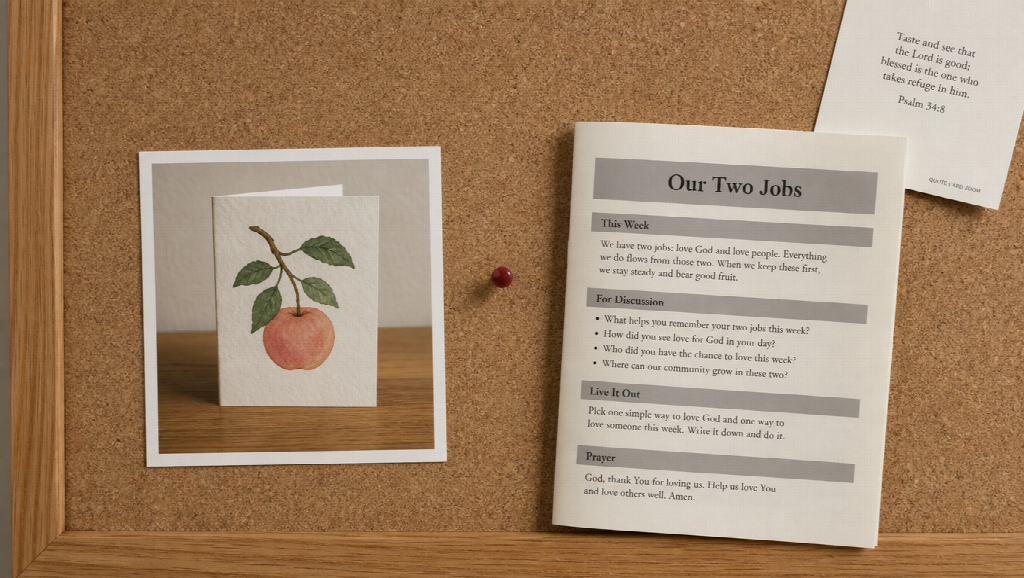
A lot of “free online video generator” posts sell one trick: drop a photo, paste a sentence, wait a few seconds, post. That is a real product category. It is also why so many clips look like a quote card that learned to zoom.
Pictures and text are not one input. A still you already shot is an identity lock. A paragraph you already published — a lesson, a product page, a newsletter — is a structure. Animating both with the same “cinematic in seconds” prompt is how you get a second room, a second typeface, and a voice that does not match the page.
This is not another Vidnoz-style tour of talking avatars, photo dance, or a free cloud editor. It is two generation jobs, two models, no claim that either is free or instant. Confirm length, export, and price in the live tool in front of you.
Job 1 — The still you already have, directed for 15–30 seconds
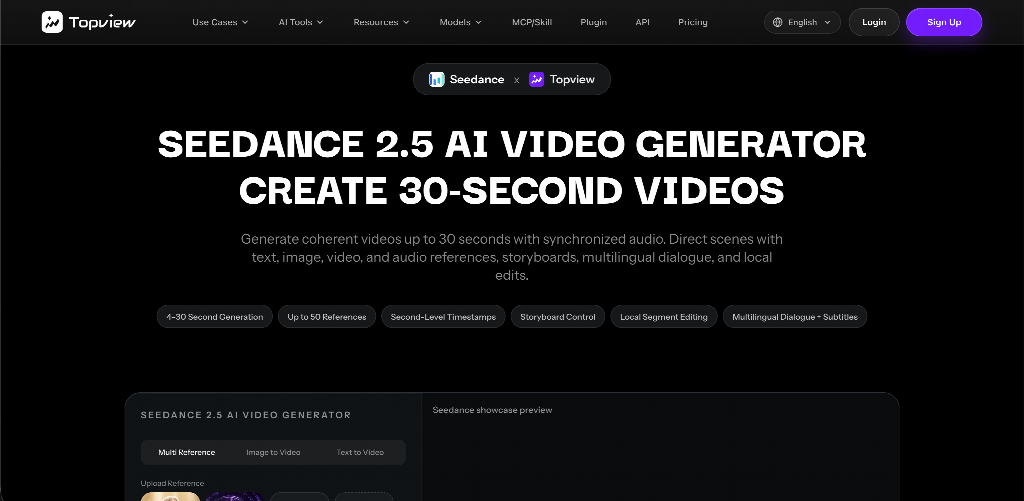
Event flyers, packshots, a classroom board, a handmade card: the picture is the asset. Image-to-video should move that object, not invent a lifestyle set.
Seedance 2.5 is a multimodal AI video model for coherent clips of about 4–30 seconds from text plus image, video, and audio references, with second-range direction. Visible export on hosted generators such as Topview is typically in the 1080p class, with a large still kit. Do not write native 4K into a brief because a homepage said “HD.” Do not treat Seedance 2.5 as a timeline app.
Write the middle like a walkthrough, not a vibe:
“0–6s the same table from the still; 6–18s hands, the card readable; 18–24s three-quarter, same light; 24–30s hold for a URL — no new logos, no extra crowd.”
If two photos are two rooms, pick one. If second eighteen grows a new frame on the wall, the folder is the bug. Attach a music bed only if you have the right to use it.
This lane is for a shareable proof, a short blessing-style card that must stay the same paper, a product hold. It is not a 12-minute class in one render.
Job 2 — The page or lesson you already wrote, as one brief
Teachers, small shops, and community pages often have the script already: a blog post, a bulletin, a “how we help” page. Re-filming it as a talking avatar is one choice. Prompting “inspiring cinematic video” is how you get a stock sunrise that is not your hall.
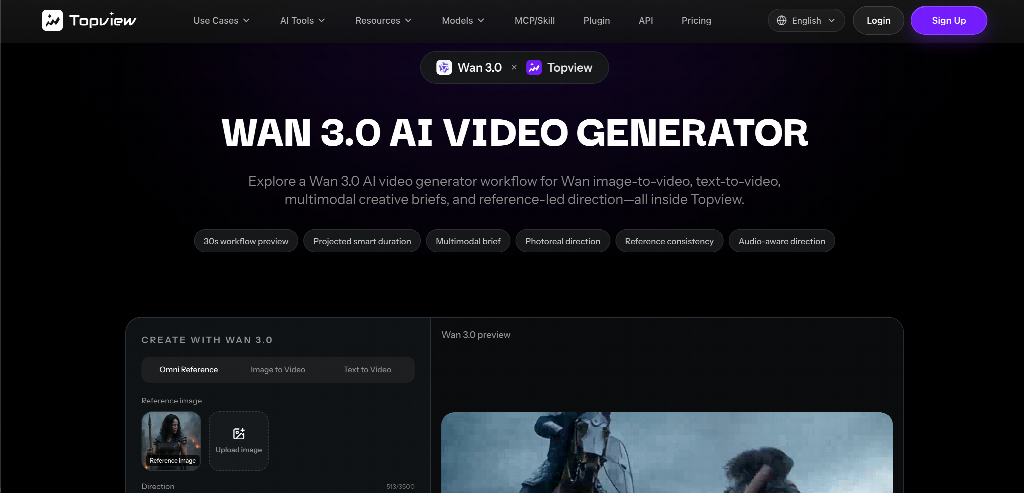
Wan 3.0 is Topview’s omni-reference model workflow for a heavier packet: images, clips, audio, and structured context from a document or webpage folded into one direction. That maps to “this page, in motion” — three steps, the headline hierarchy, language you already approved. Treat extra duration and context types as guidance until the live generator confirms them. Alibaba’s public catalog may not yet list Wan 3.0 as an official spec sheet.
Do not rank Wan 3.0 against Seedance 2.5 as two free websites. Both are models. One eats a mixed, page-led brief. One shoots a timed, kit-locked beat from stills. Neither is a talking-head template pack.
If the words include a claim, a price, or a verse you care about getting right, keep that text human. Generated captions that invent a line are a trust tax.
A short path that is slower than “seconds” and more usable
- Decide which input is the source of truth: the photo or the page.
- Pack a small kit. Non-conflicting stills. Music you own.
- Generate one Seedance 2.5 for the object-true middle. Wan 3.0 when the URL or the document is the brief.
- Inspect identity at the midpoint. Then caption in an editor. Mute autoplay only if the words are on screen.
If a take fails, change one variable — a tighter crop, a negative (“no extra furniture”), a shorter interval — not the entire aesthetic.
Who this helps (without a one-stop-shop pitch)
- People who already design quote graphics and need motion that does not mutate the type
- Instructors turning a lesson outline into a short explainer without a new actor
- Small businesses whose product photo is better than their stock-video budget
- Anyone tired of “free in seconds” clips that disagree with the still they uploaded
Avatars and lip-sync still exist as a different job. Use them when the deliverable is a presenter. Do not use them to fake a congregation or a customer.
Conclusion
Turning pictures and text into video is two crafts. A still wants a timed, kit-locked pass. A page wants an omni-brief that follows copy you already signed.
Seedance 2.5 is the model for the first. Wan 3.0 is the model for the second. Keep the free-in-seconds tools for experiments. Send the piece you would actually share to the lane that matches the source of truth — and look at the card, the label, or the headline before you hit post.